Emu Proteus 1 Drums Wave File Sample Set


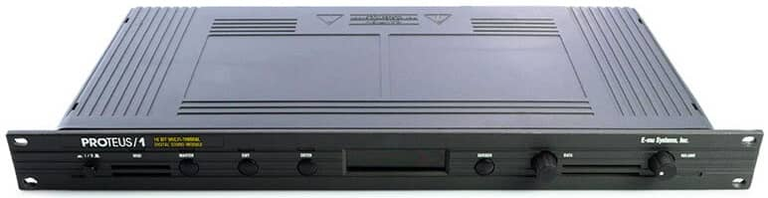
The E-MU Proteus/1 stands as one of the most influential instruments in the history of electronic music, marking the moment when high-end sampling technology became accessible to the average musician. Released in 1989 by E-MU Systems, it was the first in a line of rack-mounted sound modules that would dominate recording studios for over a decade. Before its arrival, musicians seeking realistic orchestral or pop sounds typically had to invest in the E-MU Emulator III, a massive and prohibitively expensive sampler. The Proteus/1 changed this dynamic by distilling the best sounds from that library into a compact, 1U rack unit that relied on ROM playback rather than user sampling.
The core appeal of the Proteus/1 was its "Pop/Rock" sound set, contained within a 4MB memory chip. This was a significant amount of storage for the era, and it housed 16-bit samples of pianos, organs, strings, basses, and drums that were remarkably clear and punchy. While it lacked the resonant filters found on traditional synthesizers, it compensated with a flexible modulation system known as "MIDIpatch." This allowed users to route MIDI controllers to various parameters like envelopes and LFOs, giving the static samples a surprising amount of movement and expression.
One of the unit's most professional features was its output configuration. It provided six individual audio outputs, which meant a producer could send the kick drum to one mixer channel, the snare to another, and the synth pads to a third, applying different external effects to each. With 32-voice polyphony and 16-part multitimbrality, a single Proteus/1 could effectively act as an entire band, handling drums, bass, and melodic parts simultaneously through a MIDI sequencer.
The success of the Proteus/1 paved the way for numerous successors, including the Proteus/2 Orchestral and the Proteus/3 World. Its "sample-playback" architecture became the blueprint for the "rompler" era of the 1990s, influencing how companies like Roland and Korg designed their own legendary modules. Today, the Proteus/1 is remembered not just for its specific presets—many of which appeared on countless pop hits and television soundtracks—but for democratizing the high-fidelity sound that defined the transition from the 80s to the 90s.